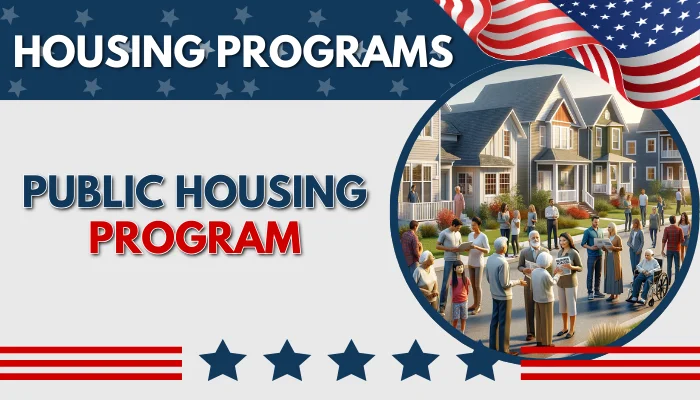
Access to decent housing is a fundamental right, and in the United States, the Public Housing Program plays a crucial role in ensuring that low-income families can obtain affordable and safe housing.
Administered through the U.S. Department of Housing and Urban Development (HUD), this program has provided housing assistance to millions of people since its inception.
Below, we will explain the most important aspects of this program, including eligibility criteria, the amount granted to beneficiaries, the requirements, registration process, benefits, and how to access support and assistance.
Who is Eligible for the Public Housing Program?
The Public Housing Program is designed specifically for low-income individuals and families who need an affordable housing solution. Eligibility criteria are based on several factors, including:
- Family income: The most important factor in determining eligibility is family income. HUD sets income limits based on family size and geographic area. Generally, to be eligible, family income must be below 80% of the area’s median income. However, priority is often given to families earning less than 50% of the median income.
- Citizenship status: Only U.S. citizens and certain eligible non-citizens (such as lawful permanent residents) qualify for the program. During the application process, documentation proving citizenship or legal residency must be provided.
- Rental history: Local public housing agencies (PHAs) may review the applicant’s rental history to ensure there are no past issues with lease violations or criminal behavior that could impact the safety and well-being of the community.
- Family composition: Families, individuals aged 62 and older, persons with disabilities, and in some cases, single individuals can apply for the public housing program.
It’s important to note that eligibility rules may vary slightly depending on the state and the local housing authority.
Amount Granted to Beneficiaries
The Public Housing Program does not provide a specific amount of money directly to beneficiaries. Instead, the program offers subsidized housing to eligible families. This means that the government covers part of the rent, allowing families to pay a more affordable rate. Generally, public housing residents pay around 30% of their adjusted monthly income toward rent. The remaining portion of the rent is covered by the public housing agency, with federal government funding.
In some cities and states, there are additional subsidies or complementary programs like Housing Choice Vouchers (commonly known as Section 8), which help families choose private market housing with similar subsidies.
Requirements and Registration Process for the Program
The application process for the Public Housing Program involves several steps that must be followed to ensure applicants meet all the necessary requirements. Here are the key steps:
- Contact the Local Public Housing Agency (PHA): Each city and county has a Public Housing Agency (PHA) that manages the program. The first step is to identify the PHA for your area, which can be done by visiting the HUD website or calling their assistance line.
- Complete the application: Once the PHA has been contacted, the applicant must fill out an application form. This form will ask for basic information about income, family size and composition, citizenship or legal residency status, and other relevant details.
- Provide documentation: Applicants will need to submit documentation to support the information provided in the application. This may include pay stubs, tax returns, benefit reports, citizenship or residency documents, and more.
- Interview: After reviewing the application, the PHA may require an interview with the applicant to verify the information and ask any additional questions if necessary.
- Waiting list: Since the demand for public housing is often high, many PHAs have waiting lists. Families who qualify for the program may be placed on a waiting list until a unit becomes available.
- Housing assignment: Once housing becomes available and the family has been selected, the PHA will notify the applicant. Families typically have the option to accept or decline the housing offered.
Benefits of the Public Housing Program
The Public Housing Program provides numerous benefits to low-income families, beyond simply providing access to affordable housing. Some of the key benefits include:
- Economic stability: By reducing the financial burden of rent, the program allows families to allocate more resources toward other basic needs such as food, healthcare, and education.
- Safety: Public housing units are often well-maintained and supervised, providing a safer and more stable environment for families compared to many low-cost private housing options.
- Community support: Many PHAs offer additional programs and services to public housing residents, such as educational programs, job training, healthcare services, and recreational activities, fostering social and economic development for families.
- Accessibility: The program also includes housing units designed for people with disabilities, ensuring that all families, regardless of physical limitations, can find suitable housing.
Program Contact and Assistance
To learn more about the Public Housing Program or to begin the application process, you can contact the U.S. Department of Housing and Urban Development (HUD) in several ways:
- HUD Website: www.hud.gov. This portal provides access to information about all housing programs, allows you to locate local public housing agencies, and review specific requirements for each area.
- HUD Assistance Line: Call the toll-free number 1-800-955-2232 to speak with a HUD representative and receive guidance on the program and how to apply.
- Local HUD Offices: Visiting a local HUD office is another option. These offices are located in many major cities and can provide personalized assistance.
The Public Housing Program is an essential tool to help the most vulnerable families in the United States obtain decent and affordable housing. Through participation in this program, beneficiaries can significantly improve their quality of life and gain the stability needed for a more promising future.

If you want to see more information about immediate food aid, here we leave you the official site so you can see all the details