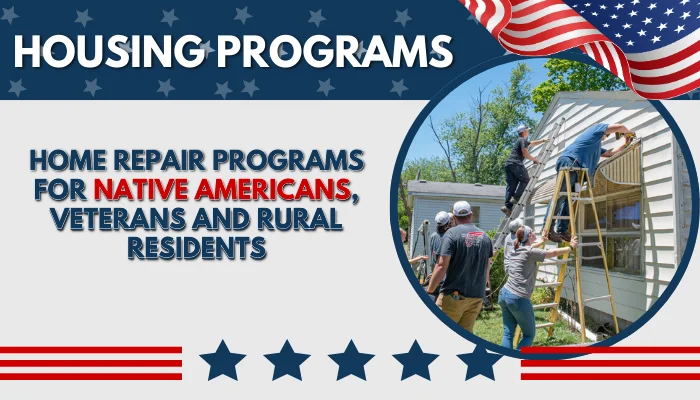
In the United States, there are various home repair programs aimed at specific populations such as Native Americans, veterans, and rural residents. These programs seek to improve housing conditions for low-income individuals, ensuring access to safe and habitable infrastructure.
What Do These Programs Consist Of?
Home repair programs offer grants and loans to individuals and families who need improvements to their homes. The funds can be used for:
- Structural repairs
- Energy efficiency improvements
- Adaptations for individuals with disabilities
- Elimination of health and safety hazards (such as lead or mold)
These programs are managed by government agencies such as the U.S. Department of Agriculture (USDA), the Department of Veterans Affairs (VA), and the Department of Housing and Urban Development (HUD), as well as by tribal and nonprofit organizations.
Who Can Apply?
The primary beneficiary groups are:
- Native Americans residing on reservations or tribal lands.
- Veterans and their families with low incomes.
- Rural residents living in deteriorated housing without access to other financing options.
Eligibility Requirements
Each program has specific criteria, but in general, applicants must:
- Demonstrate financial need. Income must be below certain limits depending on location and family size.
- Be homeowners. In most cases, only homeowners can apply for funds.
- Live in an eligible area. Homes must be located in reservations, rural areas, or communities defined by each program.
- Meet residency regulations. Generally, applicants must be U.S. citizens or legal residents.
How to Apply for These Programs?
The application process varies by program, but generally, applicants must:
- Identify the appropriate program based on their location and situation.
- Complete an application form. This can be done online or at local USDA, VA, or HUD offices.
- Provide supporting documents. Proof of income, homeownership, and residency is required.
- Wait for evaluation. Agencies review applications and determine eligibility.
Funding Amounts
Amounts vary depending on the program:
- USDA Loans: Up to $40,000 with a low interest rate (1%).
- USDA Grants: Up to $10,000 for individuals over 62.
- HUD Program: Varies by need and state.
- VA Program: Up to $90,364 in grants for disabled veterans.
- Tribal Programs: Variable funds depending on the tribal nation and resources.
Benefits and Drawbacks
Benefits:
- Improved quality of life. Homes will be safer and more efficient.
- Accessible financial aid. In some cases, grants do not require repayment.
- Specialized support. Adaptations for disabled veterans and Native Americans.
- Boost to rural communities. Improved well-being and local economy.
Drawbacks:
- Bureaucratic process. It can be slow and require extensive documentation.
- Funding limits. Not all costs may be fully covered.
- Strict criteria. Not all applicants qualify.
Contact and Assistance
For more information and assistance:
- USDA Rural Development: www.rd.usda.gov
- Department of Veterans Affairs (VA): www.va.gov
- Department of Housing and Urban Development (HUD): www.hud.gov
- Bureau of Indian Affairs (BIA): www.bia.gov
These programs represent a great opportunity for those seeking to improve their housing without compromising their financial stability. If you meet the requirements, we recommend starting the process as soon as possible to access these benefits.

If you want to know more detailed information, here we leave you the official site